CBT-WI: Weight-Inclusive CBT for Eating Disorders

A larger-bodied, gender-neutral person faces a therapist, illustrating weight-inclusive CBT (CBT-WI) for eating disorders.

“What is Weight-Inclusive Cognitive Behavioral Therapy CBT-WI? Cognitive-Behavioral Therapy is the most effective approach for treating adults with eating disorders, including bulimia nervosa and binge eating disorder. The most recent, commonly taught, and implemented version is an “enhanced” protocol, CBT-E (Fairburn, Christopher G., 2008). Unfortunately, Cognitive Behavioral Therapy (CBT) for eating disorders is not always …
Read more

Adults with ARFID

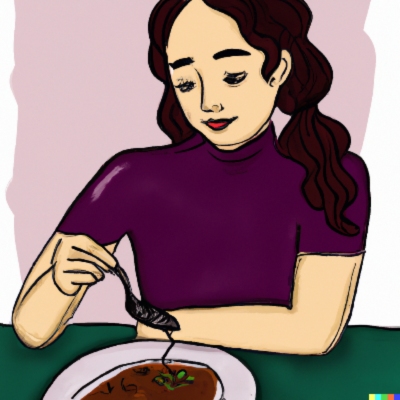
Drawing of a woman looking at her food and eating very slowly, illustrating ARFID in adults.

Avoidant Restrictive Food Intake Disorder (ARFID) was only recognized as a disorder affecting those older than age 6 as recently as 2013. Treatment and recognition of this disorder are in their infancy. Thus, many people with ARFID have lived with it for years without any treatment. Many adults with ARFID have simply had to learn …

Read more

Low-Cost Eating Disorder Psychotherapy Available

Low-Cost Eating Disorder Counseling

We are excited to announce our low-cost eating disorder therapy program. Southern California Association of Psychology Training Programs (SCAPT) designated us as a practicum site. Thus, we now provide training to advanced graduate students in psychology. We train students in evidence-based treatment for eating disorders. This allows us to further our mission of helping to …

Read more

Structuring Your Eating Disorder Recovery Environment

A hand writing in a planner, illustrating structuring your eating disorder recovery environment.

Recovery is challenging! I am repeatedly moved and impressed by the courage of my patients as they work through recovery from an eating disorder. One strategy that can help support recovery is a careful ​structuring of one’s recovery environment. This applies to adults working individually in treatment as well as to families helping adolescents to recover from …

Read more

Adjunctive Therapies to FBT: What are the Additional Therapies That May be Added to FBT? And When Should They Be Added?

Paper in a window that reads "Mindfulness," illustrating adjunctive therapies that can go alongside FBT.

In a previous post, I have discussed who is typically on an FBT team. In its traditional manualized form, the core team is a therapist, a medical doctor, and the parents. The team can also include a registered dietitian nutritionist (to guide the parents) and may include a psychiatrist. It is not uncommon for medical …

Read more

Do I Need to Quit X to Stay in Recovery?

A girl in a swimsuit looks away from the pool at a swim meet, for an article on whether you must quit a sport to stay in recovery.

By Carolyn Hersh, LCSW, CEDS-S Clinical Supervisor A difficult decision in recovery is knowing when to let go of an activity–or even a job–that could potentially re-ignite the eating disorder. As a therapist I find myself guiding my clients through exploration of their values. Some come to realize that the sport or career path they …

Read more

FBT Treatment Team Members

Purple Scrabble tiles spelling "FBT Treatment Team," the therapist, dietitian, and doctor who support Family-Based Treatment.

Family-based treatment (FBT) is the leading evidence-based treatment for teens with anorexia nervosa and bulimia nervosa. In an ideal world, every person with an eating disorder would have access to a full treatment team. This team could include a therapist, a dietitian, a medical doctor, and a psychiatrist. However, manualized FBT calls only for a …

Read more

Sweatin’ for the Wedding: Say, “I don’t.”

The feet of a bride in a white gown and a groom in black shoes, for an article on saying no to "sweatin' for the wedding."

by Carolyn Comas, LCSW, CEDS-S Wedding Diet? Just say No! In November 2018, my boyfriend proposed to me. It was one of the most exciting days of my life thus far. With a proposal comes the next exciting chapter: wedding planning. For many brides-to-be, this entails finding that perfect gown. Sadly, although not surprising, once …

Read more

Weight Gain in Bulimia Recovery

Purple Scrabble tiles spelling "Weight gain in bulimia recovery" for an article on what to expect about weight when recovering from bulimia.

by Elisha Carcieri, Ph.D., therapist at EDTLA One of the hallmark features of eating disorders is placing a high value on body weight and shape in determining one’s self-worth. In addition, people with eating disorders often believe that diet, exercise, or–in the case of bulimia nervosa–purging, can control body shape and weight. Individuals with bulimia …

Read more

Sleep: Monitoring and Treatment of Insomnia Without Drugs

Feature image for an article on monitoring sleep and treating insomnia without drugs.

By Elisha Carcieri, Ph.D., Staff Psychologist “A ruffled mind makes a restless pillow.” Charlotte Bronte Sleep Self-Monitoring In our self-obsessed culture, monitoring and tracking heartbeat, steps, exercise, food intake, and sleep is commonplace. My sister has recently been tracking her sleep using an app on her smartphone, and she encouraged me to do it too. …

Read more

Skip to content